
What is the HVAC Condensate Drain Line?
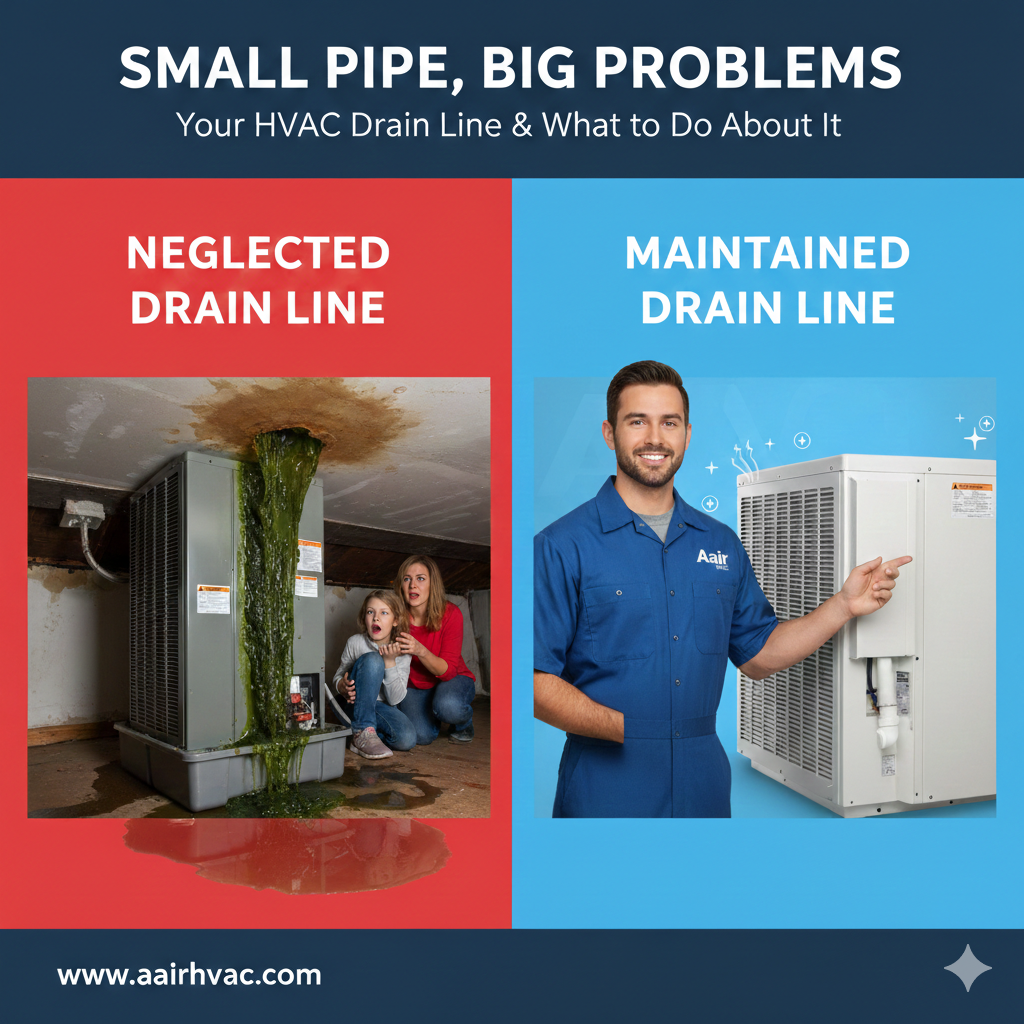
During the cooling process, your air conditioner removes heat and humidity from your indoor air. This humidity turns into water droplets that collect on the evaporator coil. This water then drips into a pan and flows out through a PVC pipe – that’s your condensate drain line. Its job is simple: safely carry away this water, usually to a floor drain or outside your home.
The Big Problems When the Small Pipe Gets Clogged
Ignoring your AC drain line can lead to several major headaches:
Water Damage & Leaks: This is often the first and most visible sign of a clog. If water can’t drain, the pan overflows, leading to leaks in your ceiling, walls, or attic. This can cause costly structural damage, ruined insulation, and damaged personal belongings.
Mold and Mildew Growth: Stagnant water in the drain pan or pipe creates an ideal breeding ground for mold and mildew. This not only produces a musty, unpleasant odor but can also release spores into your home’s air, exacerbating allergies and respiratory issues.
System Shutdowns: Many modern HVAC systems have a safety switch in the overflow pan. If water levels get too high, this switch will automatically shut off your entire unit to prevent further water damage. While it protects your home, it leaves you without air conditioning when you need it most.
Reduced Efficiency: A constantly wet environment in the drain pan can lead to corrosion and other issues that hinder your system’s overall efficiency, causing it to work harder and consume more energy.
What Causes a Condensate Drain Line Clog?
The main culprit is often a slimy buildup of:
Algae and Sludge: Over time, naturally occurring algae and other microorganisms thrive in the moist, dark environment of the drain line.
Dust and Debris: Dirt, dust, and pet dander from your indoor air can bypass filters (especially if they’re old or ill-fitting) and mix with the condensate, forming a thick sludge.
Insects and Pests: Occasionally, small insects or even rodents can get into the outdoor drain opening and build nests, creating blockages.
What You Can Do: HVAC Drain Line Maintenance
Preventing a clogged drain line is easier than fixing one! Here are simple steps you can take:
Regular Flushing: Every few months (especially during peak cooling season), pour a cup of distilled white vinegar down the access opening of your condensate drain line (usually a T-shaped vent or cap near the indoor unit). This helps kill algae and break down sludge. Follow with a cup of water.
Keep it Clear Outside: Ensure the outdoor end of the drain line isn’t blocked by dirt, grass clippings, or other debris.
Change Air Filters Regularly: A clean air filter traps more contaminants, preventing them from entering your system and contributing to drain line clogs.
Schedule Professional Maintenance: During routine HVAC tune-ups, our technicians at Aair HVAC will thoroughly inspect and clean your entire condensate drain system, ensuring it’s free of blockages and operating correctly. This is one of the most effective ways to prevent major issues.
Don’t let a “small pipe” cause you “big problems.” Proactive care for your HVAC drain line is a simple step that goes a long way in maintaining your home comfort and protecting your property from avoidable damage.
Concerned about your HVAC drain line or need a professional inspection? Contact the experts at Aair HVAC today! Visit www.aairhvac.com or give us a call!

