
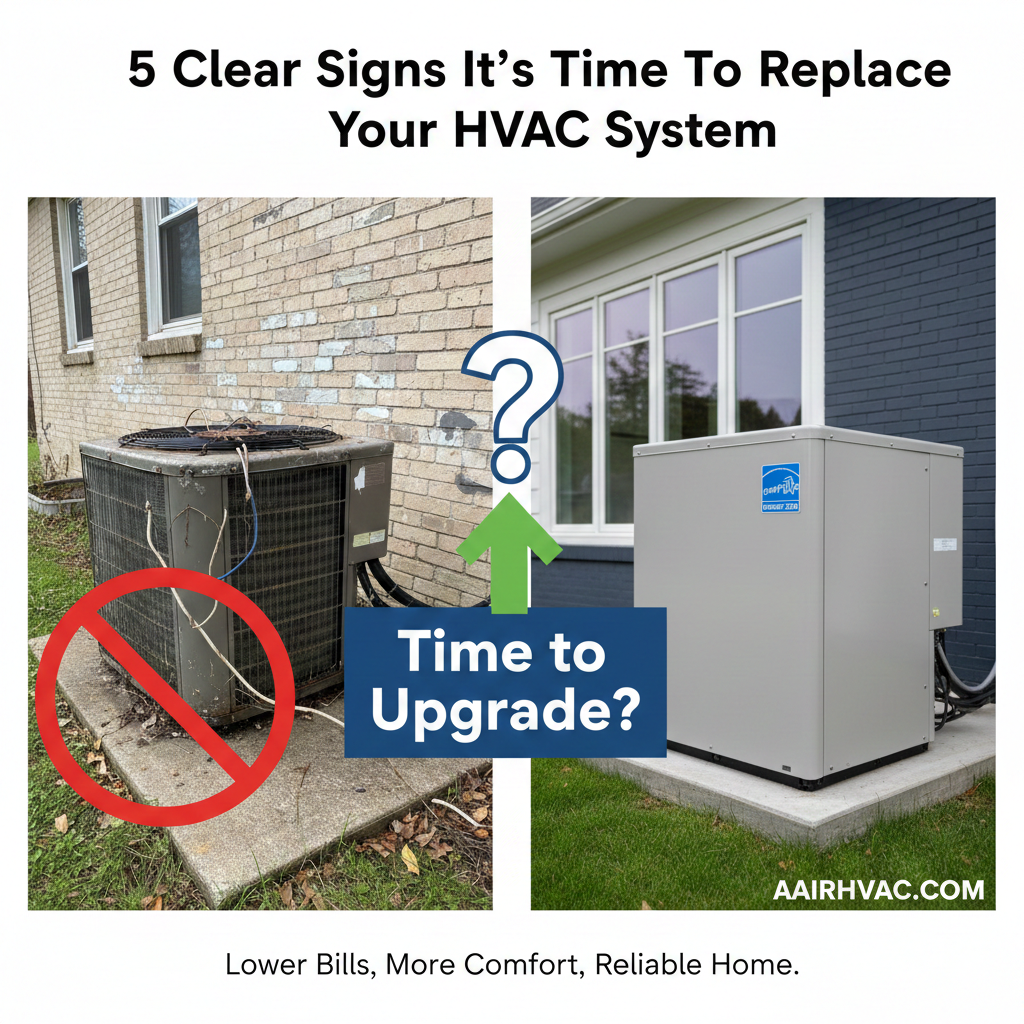
1. The Age Factor
The most straightforward indicator is the system’s age. On average, a furnace or air conditioner lasts about 10 to 15 years.
Air Conditioners (ACs): If your AC is over 10-12 years old, it’s likely using outdated, less efficient technology (and possibly outdated refrigerant like R-22).
Furnaces: While some furnaces can last 15-20 years, their efficiency significantly drops in the later years.
Once a unit passes its typical lifespan, maintenance issues become more frequent and the cost of necessary parts can skyrocket.
2. Skyrocketing Energy Bills
Are your monthly utility bills noticeably higher than last year, even when your usage habits haven’t changed? This is often the first and most expensive sign that your HVAC unit is losing its efficiency.
As components wear out, the system has to run longer and work harder to achieve the same set temperature. A new, ENERGY STAR® certified unit—with a higher SEER (Seasonal Energy Efficiency Ratio) rating for ACs or AFUE (Annual Fuel Utilization Efficiency) rating for furnaces—can drastically reduce your energy consumption and operating costs.
3. Frequent and Costly Repairs
The “50% Rule” is a good guideline for replacement: If the cost of a repair is 50% or more of the cost of a brand-new unit, replacement is the more financially sound decision.
Spending money on constant repairs is like pouring money into a leaky bucket. When you call a technician for the third time in a single season, it’s a strong hint that the system is past its prime and a total replacement will offer better reliability and a long-term warranty.
4. Uneven Heating and Cooling
Do you have hot spots in one room and cold drafts in another? This is a common indicator of an improperly sized unit, leaky ductwork, or a system that can no longer meet your home’s thermal load requirements.
An aging unit often struggles with performance, leading to short-cycling (turning on and off frequently) or simply failing to move air effectively. A modern, properly sized system installed by professionals ensures consistent comfort in every room.
5. Strange Noises or Smells
While every HVAC system makes some noise, new, persistent sounds are a red flag:
Loud Clanking, Banging, or Grinding: This suggests a serious mechanical failure, such as a loose or broken part in the motor or compressor.
Persistent Odors: A burning smell could indicate an electrical problem or overheating components. A musty, stale smell could point to mold or mildew in the ductwork or evaporator coil.

